English| EUR
Suggested for you
More currencies
Choose a language
Every summer, thousands of visitors leave Albufeira on a guided quad tour into the hills behind the coast, and most return with nothing more dramatic than dust in their hair. The rides that go wrong tend to go wrong for a small, repeatable set of reasons. This is quad biking dangerous guide sets out what those reasons are and how much of the risk sits in the rider's hands.
Quick answer
Quad biking carries real risk, but on guided Algarve Mountains tours that risk is low and largely controllable. The activity itself is free to access — entrance to the mountains costs 0 EUR, with fees charged by individual tour operators. Operators run 10:00–18:00 daily, and arriving between 10:00 and 17:00 leaves time for the safety briefing that most incidents trace back to skipping.
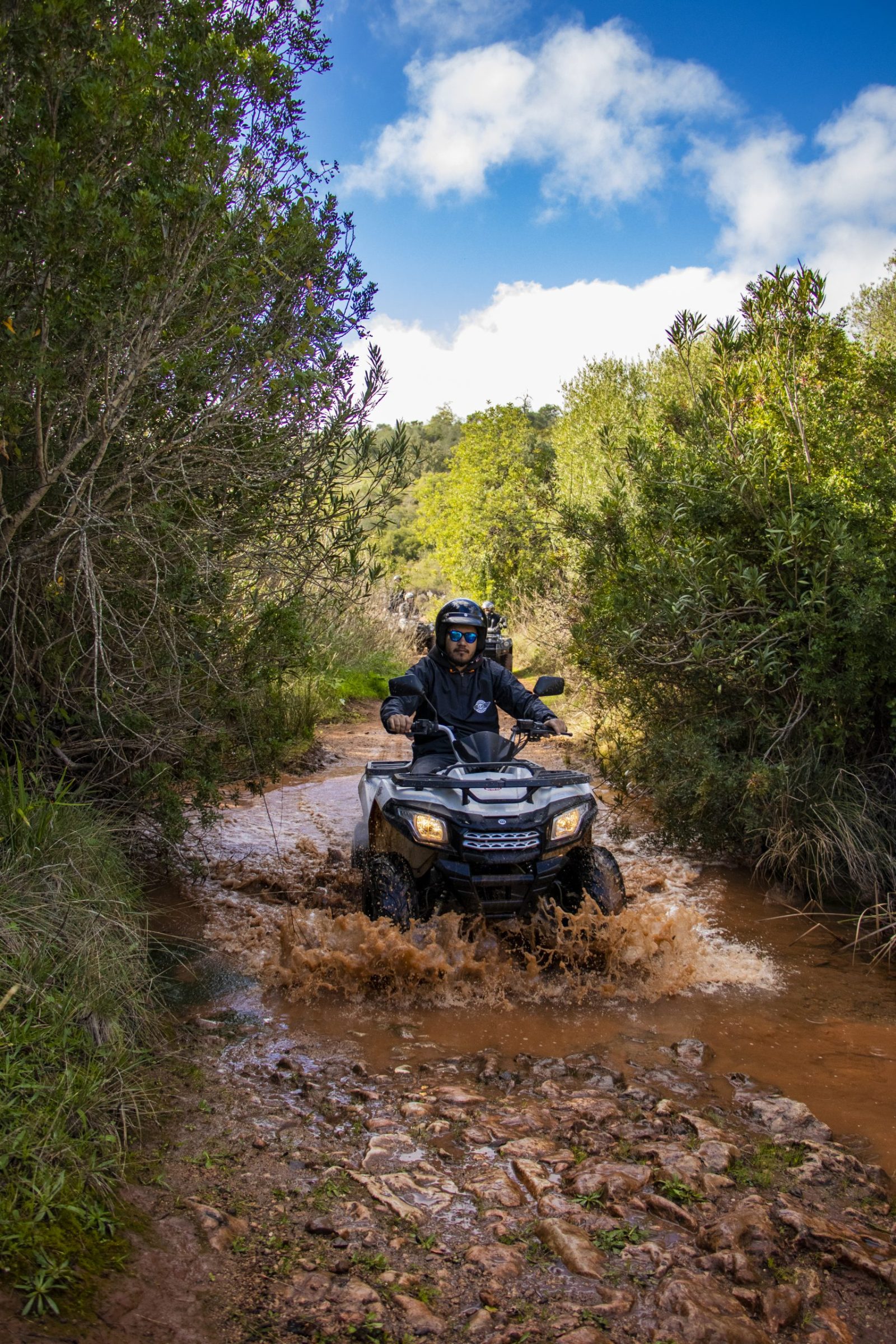
Quad bikes handle nothing like the cars and motorcycles most visitors already know. They do not lean into corners; they resist them. That single characteristic — a rigid four-wheel chassis with a high centre of gravity — explains why the question is quad biking dangerous keeps surfacing in Algarve trip-planning forums, and why the honest answer depends less on the machine than on the rider's first ten minutes with it. The terrain behind Albufeira adds its own character. The Serra tracks that guided convoys follow are a mix of compacted red clay, loose schist gravel, dry riverbed crossings and eucalyptus firebreaks that climb and drop faster than they look from a photograph. Traction changes without warning where a track passes from shade into full sun. In August the surface is baked hard and dusty, which lengthens braking distances and reduces visibility in a convoy; after the first autumn rains the same clay turns slick. A quad bike tour Algarve operators run in convoy formation exists partly for this reason — a lead guide reads the surface ahead and sets a pace the whole group can hold. Riders who drift off the line or close the gap between machines are the ones who find the ruts. Statistically, the incidents that reach hospitals in off-road quad use cluster around a narrow set of causes: rollovers on side slopes, throttle input in a turn, riding beyond a guide's sight line, and children or teenagers on adult-sized machines. Guided passeios de moto-quatro in the Algarve address most of these structurally, through age limits, helmets, engine-size matching and the briefing that precedes departure. Self-drive rental without a guide removes those layers. The practical takeaway for anyone weighing up whether is quad biking dangerous enough to skip: the Algarve Mountains sit at Albufeira's doorstep, entry is free, and the exposure a visitor accepts is closely tied to which operator they book and how carefully they listen before the engines start. Treat the briefing as the most important part of the day, ride within the convoy, and the mountain tracks behind the Algarve coast become one of the more manageable adventure activities on offer. Booking through the tour pages on this site keeps the operator details, group sizes and departure windows visible before committing.
“Quad bikes do not lean into corners; they resist them — and that single characteristic explains most of what goes wrong.”
Misconceptions about quad biking often arise from equating recreational trails with unregulated off-roading. Professional oversight and mandatory safety protocols are standard features of tours in the Algarve Mountains.
MythQuad biking is inherently reckless.
FactTours operate on established, risk-assessed trails with professional guides leading every group.
MythYou do not need prior experience to be safe.
FactAll participants receive mandatory safety briefings and equipment demonstrations before operating any vehicle.
MythSafety gear is optional during mountain rides.
FactOperators require all riders to wear certified helmets and appropriate protective gear for the duration of the tour.
The recommended arrival window is 10:00–17:00 to minimize exposure to extreme mid-day heat while ensuring adequate visibility for safety briefings and technical trail navigation. Selecting this window reduces fatigue-related risks and allows riders to complete tours before lighting conditions diminish.
Mild temperatures 18°C–24°C
Cooler air improves engine performance and rider comfort.
Intense heat often exceeding 30°C
High temperatures increase dehydration risks and physical exhaustion.
Pleasant temperatures 20°C–26°C
Stable weather conditions provide optimal visibility and trail traction.
Variable, 10°C–18°C
Occasional rain may increase trail difficulty and mud.
Verdict: The best time for quad biking is April, May, September, or October, arriving between 10:00–17:00 to avoid peak heat.
Most quad biking incidents in the Algarve Mountains trace back to a handful of avoidable decisions made before the engine starts. These are the errors that turn a guided trail ride into an injury report.
Arriving late and skipping the safety briefing
Plan to arrive between 10:00 and 17:00 so there is time for the full briefing before your tour departs. Ask the guide to repeat the throttle, brake and hand-signal instructions if anything was unclear.
Wearing sandals, flip-flops or open shoes
Wear closed-toe shoes with a firm sole and ankle coverage. Loose footwear slips off the pegs on rocky descents and offers no protection if the quad tips.
Riding beyond your actual experience level
Tell the operator your true experience when booking and choose a route that matches it. Keep to the guide's pace on the mountain tracks rather than pushing ahead on unfamiliar terrain.
Turning up without a confirmed booking
Reserve your tour in advance through the operator's booking page. Entry to the area is free at 0 EUR, but quad tours are commercial activities with limited departure slots.
Leaving without a valid driving licence
Check the operator's licence requirement before travelling to Algarve Mountains, Albufeira region, Portugal, and bring the physical document.
Loose clothing, long hair or dangling straps untied
Tie back long hair, secure scarves and bag straps, and avoid baggy sleeves that can catch on handlebars or brush.
The facilities in the Algarve Mountains operate daily, providing a consistent schedule to coordinate tours and safety briefings. Planning your visit within these hours ensures that professional operators are available to manage equipment and route guidance.
Access to the Algarve Mountains region for recreational activities is free of charge. Participation in quad biking requires booking a professional tour, where fees cover specialized equipment, insurance, and guided safety support.
Verdict: While regional access is free, visitors pay commercial tour operator fees which vary based on the duration and specific services included.
Most of what keeps riders safe on the Algarve mountain trails is decided before the engine starts, so work through these items in order.
Everything you need to know about is quad biking dangerous
Quad biking is a controlled activity where operators prioritize safety through mandatory briefings and guided routes. While the terrain is uneven, following the instructions of your guide ensures that is quad biking dangerous becomes a manageable concern rather than a high-risk event. Operators provide the necessary protective equipment to ensure all participants remain safe on the trails.
Professional tour operators implement rigorous safety protocols, including comprehensive vehicle checks and speed control measures. They ensure that is quad biking dangerous risks are mitigated by matching the pace to the skill level of the group. Each excursion includes a thorough safety demonstration before you set off into the Algarve landscape.
Beginners often find that off-road excursions are well-structured, making it easy to learn the controls quickly. It is a common misconception that is quad biking dangerous for everyone; however, most tours are designed specifically for those with little to no prior experience. Guides remain present throughout the journey to provide support and technical assistance as needed.
Age restrictions are set by operators to ensure compliance with insurance and safety regulations, typically requiring a valid driving license for the driver. Because is quad biking dangerous variables often depend on individual maturity and physical capability, operators conduct assessments before departure. Please confirm specific age requirements with your chosen tour operator at the time of booking.
The primary risk during summer is the heat, which can lead to fatigue if not managed correctly. We recommend arriving within the best arrival window of 10:00–17:00 to avoid the most intense sun exposure. Staying hydrated and following the guide's lead helps prevent exhaustion and maintains focus on the trail.
Minimizing risk involves staying on marked paths and adhering to the speed limits set by your guide. It is important to remember that is quad biking dangerous perceptions often ignore the importance of constant vigilance and following the trail leader. Avoid unnecessary maneuvers and always keep a safe distance from other riders.
Wearing sturdy, closed-toe footwear and long trousers is standard practice to protect against debris and engine heat. You will typically be provided with a helmet and sometimes goggles as part of the operator requirements. Proper attire is essential for comfort and provides an extra layer of protection during your off-road journey.